By: April McKoy
For years, I thought Presentations of Learning were primarily about showcasing and celebrating learning. I still believe they do that. But after watching our Transformative Leaders of Massachusetts (TLM) fellows prepare for and deliver their Presentations of Learning this spring, I’ve come to believe something else:
The Presentation of Learning is not simply evidence of learning. It is a learning experience in and of itself.
As educators, we often treat presentations as the culminating event; the moment participants demonstrate what they have already learned. The learning happens first. The presentation comes after. What we observed this spring challenged that assumption.
As fellows reflected, rehearsed, revised, and wrestled with how to tell the story of their growth, new learning emerged. They discovered patterns they had not previously seen. They clarified what they now believed about leadership. They made meaning of experiences that had felt disconnected while they were living them. Again and again, fellows told us some version of:
“I used to think one thing. Now I think something different.”
One fellow thought her Presentation of Learning would be about instructional improvement. After all, she had spent two years helping her school strengthen teaching and learning. Yet as she reflected on that work in preparation for her Presentation of Learning, she realized her deepest learning was something else entirely. The most significant shifts had occurred when students moved from being subjects of improvement efforts to active partners in shaping their own learning. What she thought was a story about instruction became a story about student voice, agency, and partnership.
Another fellow thought her story was about leading change. As she reflected on two years of work, she realized it was actually about changing herself. The leader who began the fellowship believed she needed to drive improvement through urgency, effort, and sheer determination. The leader standing before us had come to understand something different: lasting change happens when people build it together. What she thought was a story about implementation became a story about vulnerability, collaboration, and collective responsibility.
As we supported fellows through the final stretch of the fellowship, we started to notice a pattern. The Presentation of Learning wasn’t functioning as the end of the learning journey. In many cases, it was helping fellows uncover lessons, shifts, and insights they hadn’t fully recognized until they were asked to tell the story of them.
In retrospect, one of the traps we almost fell into as designers of the experience was believing fellows needed to be “ready” before they presented. We worried about whether their stories were polished enough, complete enough, or insightful enough. But that was never the point. The learning wasn’t over.
The act of preparing, reflecting, revising, and presenting was helping create the very insight we hoped fellows would share.
A few days after the Expo, I was reflecting with Karla Baehr, a longtime champion of TLM and one of the wisest educational leaders I know. During our conversation, she helped me see something else I hadn’t fully appreciated. We had intentionally designed the audience to include peers, colleagues, executive sponsors, and outside guests. What I hadn’t fully considered was how that combination shaped the learning itself. Fellows couldn’t simply present what sounded good. Their peers knew too much. Their colleagues knew too much. Their sponsors knew too much. Instead, they were forced to wrestle with a deeper question:
What is the truest story I can tell about my learning and its impact?
That question elevated the work. It pushed fellows beyond reporting what they had done and toward making meaning of who they had become. And the learning did not stop with the presenter.
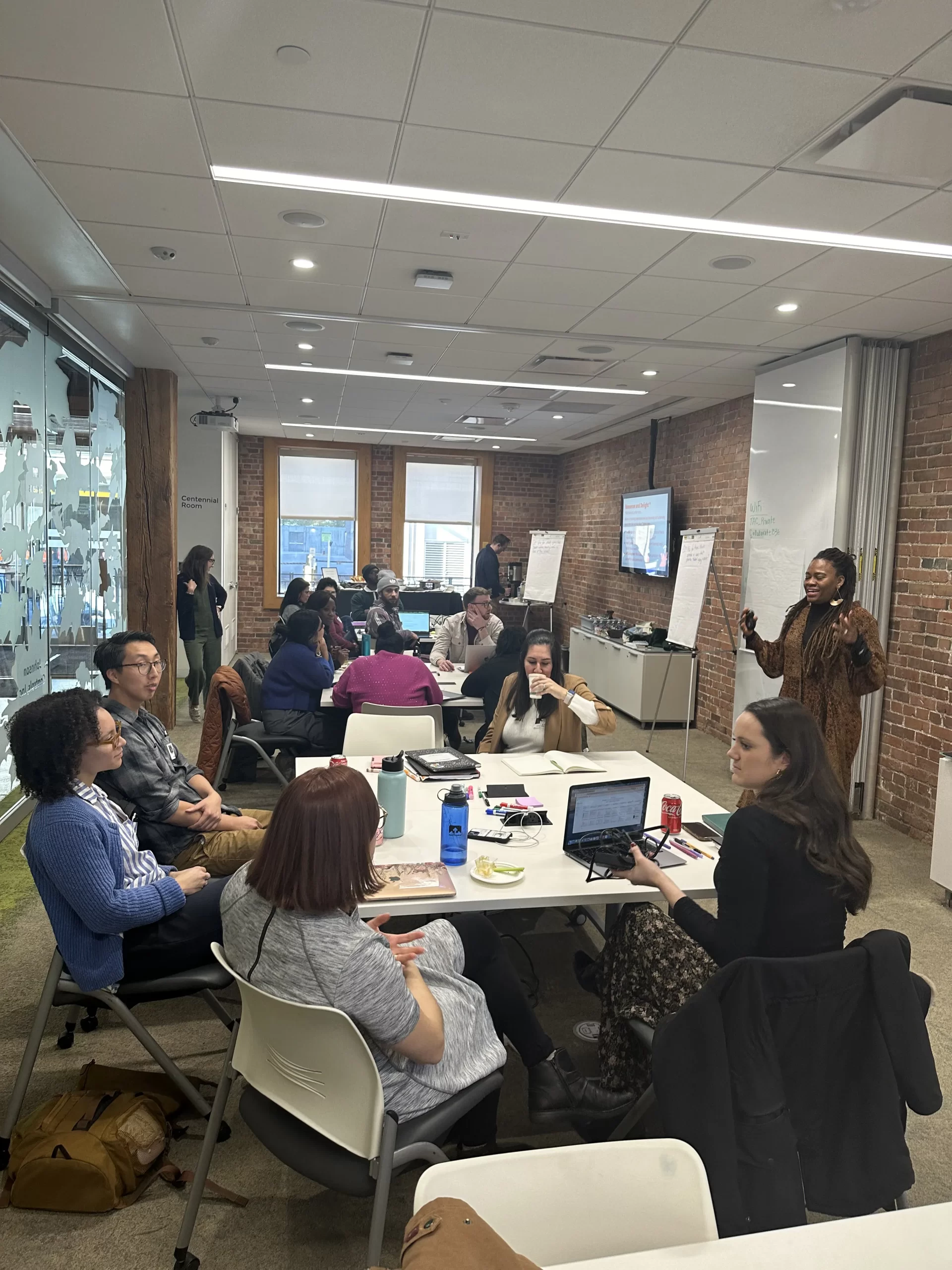
Colleagues saw possibilities for their own schools. Executive sponsors witnessed the cumulative impact of two years of leadership development. Guests encountered concrete examples of what transformational leadership can look like in practice. The Presentation of Learning became a learning experience not only for fellows, but for everyone in the room.
As we reflect on this year’s Expo, we are increasingly convinced that Presentations of Learning are not merely a way to document transformation. They are one of the ways transformation happens.