 By: Alexis Goldberg
Fellow educators, allow me to make a bold claim: we are wasting our energy in endless, circular conversations about what rigor means. When it comes to rigor, it’s time to stop defining and start doing. Our Springpoint team recently conducted a school observation visit that yielded a familiar finding. The report noted that “the faculty express different, and sometimes competing, definitions of rigor regarding the creation, planning, and execution of learning experiences.” Yep, I thought, sounds familiar. In my over 20 years in education, “different, sometimes competing, definitions of rigor” has been an abiding theme. I’ve heard educators claim rigor is a buzzword, or that it is too often conflated with ‘harder’ but not more intellectually engaging work. Others claim the word rigor promotes stiffness and inflexibility as in rigor mortis. I felt like Indigo Montoya from The Princess Bride: “You keep using that word. I do not think it means what you think it means.” But I’ve come to believe that this definitional noodling is a dangerous pastime. Because ultimately, spinning our wheels talking about what we mean by rigor keeps us from doing the important work of enacting rigor—or, as we define it at Springpoint, critical thinking in the context of open-ended questions that lack simple solutions—for every student, every day, in every classroom.
To be clear, I’m not arguing against a shared definition of rigor. Definitions help us articulate what we’re looking for and anchor in a shared vision, and schools and systems flourish with that clarity. But there are plenty of good definitions out there—I’m suggesting it’s time to pick a definition and get to work. And if you’re stuck, might I suggest Springpoint’s definition, which converted me from a rigor skeptic to a rigor evangelist. Springpoint anchors in a robust articulation of rigor that always sits alongside our definition of purpose, since we believe that rigor and purpose are mutually reinforcing. Our description of rigor is multi-faceted and includes skills and standards alignment, student thinking, cognitive lift and independence, materials modalities and student products, and expectations for student work. Most importantly, it is anchored in our belief about what young people should be doing each and every day: thinking critically about meaningful, personally valuable tasks. Joining a team with such precision about what rigor is, and what it can be at its best, has created a seismic shift in my understanding about how we talk about rigor. It has offered clarity about the what of rigor, sure, but also allowed me to turn my attention to the how (the way that teachers enact rigor), and the who (seeing rigor as equity, including an examination of which students regularly experience this critical thinking in personally valuable contexts, and which do not).
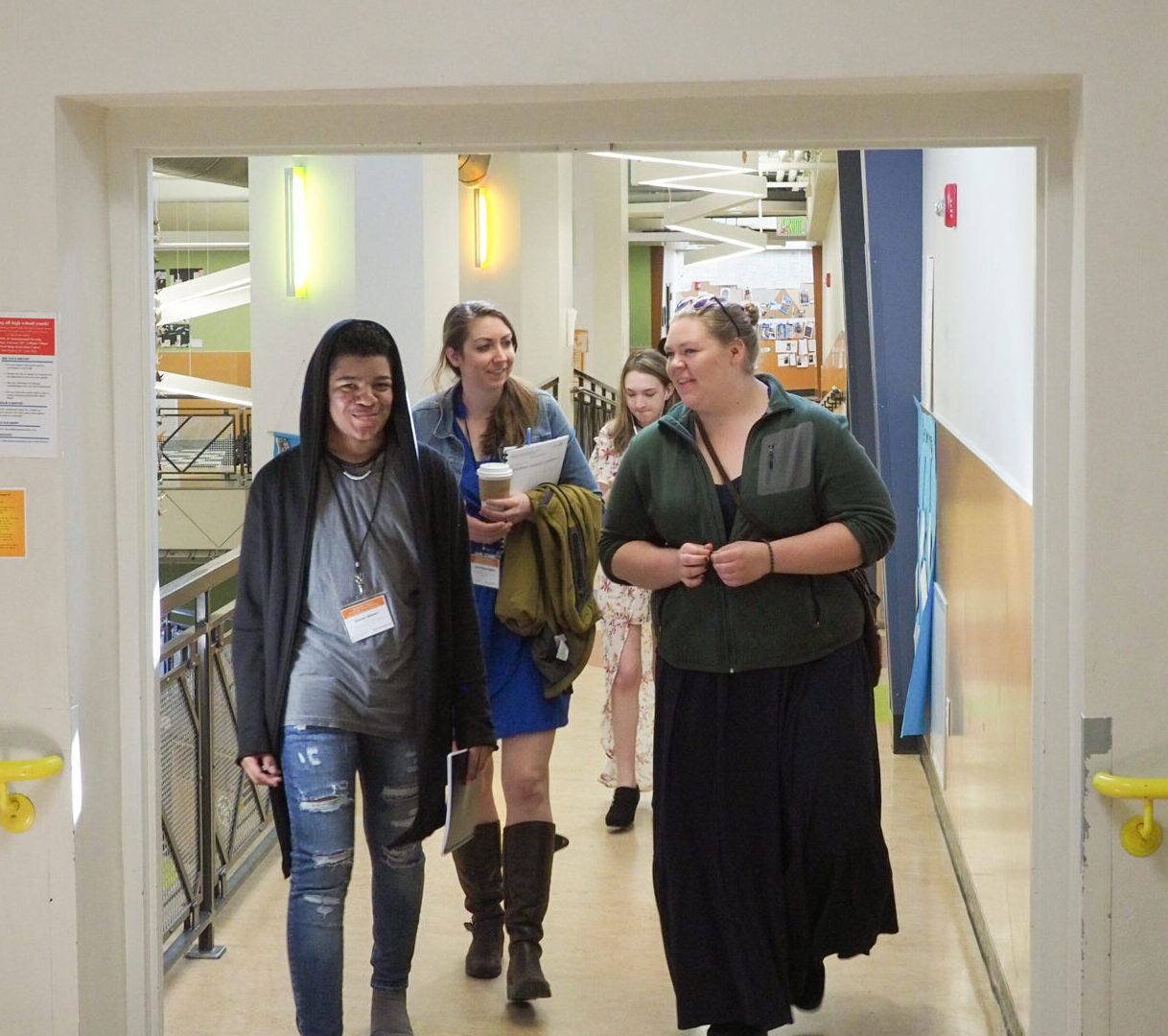
With a clear definition of rigor, we get to focus on the real work of rigor, which is enacting it. For example, at Springpoint it allows us to craft clear, precise action steps for schools to support their collective growth and development, as we do in our observation visits. Recently, our team gave the following feedback to a school interested in identifying next steps for rigor: “While many lessons are aligned to grade-level standards, the execution of the lessons at times lowers the rigor for students. In classroom observations, teachers in most classrooms were owning the majority of the cognitive lift.” The report went on to offer precise, observed examples. The analysis that followed offered ways to create more opportunities for students to talk to each other about the existing tasks, shifting the teacher role to facilitator of learning.
The team also was able to identify that ‘standards aligned’ isn’t enough when ensuring rigor. Pedagogy shapes how students experience a task, and even strong tasks depend on teaching that supports students in doing that thinking. At the same time, standards alignment alone doesn’t guarantee that students are being asked to do deep thinking. When tasks primarily require recall and transfer of information, no amount of excellent teaching practices can shift the lift to students. Anchored in a clear definition, the team observing was able to leave the school with an authentic path to increasing rigor for all students.
Grounding in a clear definition of rigor also allows us to elevate the student learning experience, as we do in our Transformative Learning Experience Units (TLEs). For example, in a unit on students’ First Amendment rights, students learn how to apply precedent and pose hypothetical questions in order to argue in front of a moot court. In a unit where students create a photo-essay about gentrification, they learn to see photographs as intentionally constructed and advancing an argument, while they also grapple with conflicting data and viewpoints about the impact of economic development on a local neighborhood. In a unit on genetic engineering, students practice thinking like a genetic engineer, designing a plasmid—a small loop of DNA that genetic engineers use to introduce new traits into bacteria—in order to detect a common pollutant in a local water source. In all, TLEs require students to go beyond the surface, to do more than simply “find out” an answer, but rather “figure out” something that is not obvious, to reconcile competing claims or produce a novel insight. At Springpoint, every TLE is anchored in rigor and purpose, which means that every day students are doing the most important thinking about topics that matter to them personally. The impact of designing tasks in this way is that it shifts the felt experience for young people and helps them connect with the learning personally. For example, a student who completed a math TLE shared, “Yes, I learned about math and algebra… but I feel that I really learned a lot about myself in this class and what I wanted to do with my future… it put a new way of thinking into my mind, a new frame to put into perspective how I view the world as opposed to just being in a math class.” The experience this student had, of rigorous coursework anchored in their own personal experience, literally shifted their perspective about their future.
These are just some of the ways we leverage our rigor definition at Springpoint for classroom impact. But with a clear, shared definition, you can choose your own adventure. You can use it to analyze student work and teacher tasks, to discuss classroom practice, or to provide actionable feedback. You can use it for continuous improvement—to shape the questions for student feedback in empathy interviews, to develop clear ‘look fors’ for classroom walkthroughs or student shadowing, or to create a school-wide instructional focus. Schools and systems can use that clarity to get laser focused on who has access to rigor and who does not, looking at classrooms and schools with a lens of the experience of each student, and asking if everyone—regardless of their racial identity, gender, age, and economic background—is engaged in rigorous tasks, in rigorous ways. A shared understanding of how rigor looks and sounds allows us to get to work enacting it.
Definitional clarity has allowed me—finally—to embrace rigor, not as an abstract concept, but as a lived experience for young people in schools. These times call for critical thinking, they demand the application of knowledge and skills in non-routine circumstances, they demand the relentless pursuit of this experience for every student in every school in our country. Starting with—not arguing about—a clear definition, and helping students to actualize the definition through rich experiences in every classroom every day is the path forward to creating equitable learning experiences for all students. Let’s spend our time working on what is most important—not defining or debating the idea of rigor, but enacting rigor by changing the learning experience for every student.